Glass Reinforced Plastic (GRP)
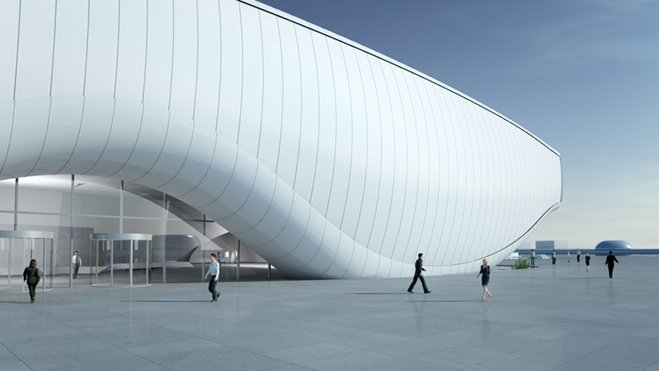
Glass Reinforced Plastic (GRP), commonly known as fiberglass, is an exceptionally versatile composite material widely used to construct highly durable, lightweight dome structures and architectural elements. A GRP structure is manufactured by combining fine glass fibers with a polymer matrix, resulting in a material that offers an outstanding strength-to-weight ratio. This unique composition allows for the creation of large, self-supporting domes that often do not require heavy internal steel or concrete frameworks.
First developed in the mid-1930s, GRP has become a staple in the building industry. Its architectural advantages became widely recognized in 1967 when demolition crews attempted to destroy Disneyland's all-fiberglass "House of the Future." Amazingly, the wrecking ball merely bounced off the structure, proving the material's incredible resilience. Today, because GRP is inherently resistant to corrosion, harsh chemicals, extreme weather, and UV degradation, these structural elements are utilized across demanding environments—serving as everything from specialized radomes to elegant architectural roofing elements for high-profile projects.
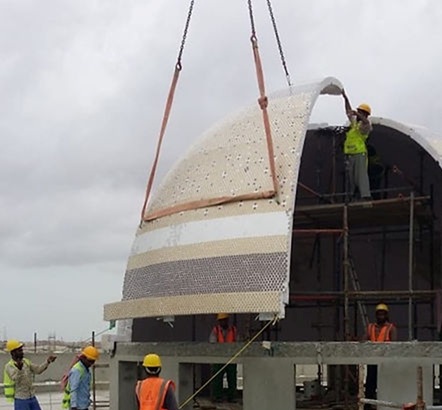
Furthermore, GRP components offer immense design flexibility. They can be custom-molded to exact dimensional specifications and finished in virtually any color or texture to seamlessly integrate with existing architectural styles. For large-scale projects, they are typically manufactured in modular, easily transportable sections that allow for rapid and cost-effective on-site assembly.
Fabrication Methodology
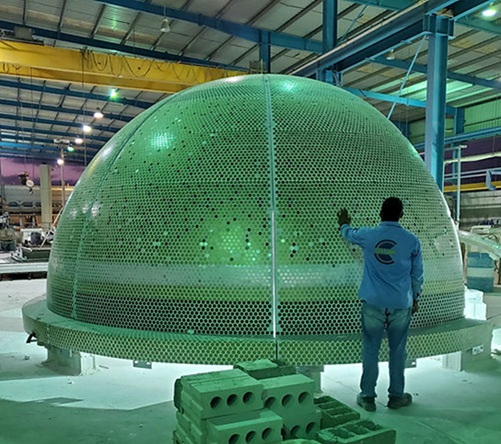
- Design & Drafting: STATION's in-house design and drafting teams work closely with you, the client, to capture your architectural idea on paper. Once all the detailed engineering drawings have been approved, our sculptors carve a precise scale model to your exact specifications.
- Mold Engineering: A high-fidelity mold is then fabricated from fiberglass, steel, wood, or specialized rubber depending on the intricacy of the detail required. Into this mold, a carefully designed mix of premium polyester or epoxy resin is sprayed, layered with alkali-resistant glass fibers. Virtually any radius or complex curvature can be molded.
This seamless integration of digital design and manual fabrication ensures that your aesthetic vision is perfectly realized, combining advanced material science with artisanal craftsmanship.
Structural Applications
While GRP is world-famous for enabling massive structural domes, its applications extend far beyond. It is used extensively for both interior and exterior fixtures in an infinite variety of shapes, styles, and textures in modern developments and sensitive historic restorative projects.
- Domes & Cupolas
- Fountains & Pools
- Columns & Pillars
- Balustrades
- Commercial Planters
- Decorative Panels
- Architectural Sculpture
- Grand Entryways
- Detailed Moldings
- Building Facades
- Intricate Cornices
- Porticos
- Signage Systems
- Modular Roofs
Why Specify GFRP?
Glass Fiber Reinforced Polymer brings unparalleled benefits to modern construction and architectural design. Its unique composite matrix allows for extraordinary design flexibility without compromising structural integrity or adding excessive dead weight to the building's primary framework.
High Strength
GRP features a very high strength-to-weight ratio, making it an incredibly resilient material for heavy structural additions and high-stress environments.
Extreme Lightweight
Exceptionally low weights of just 2 to 4 lbs. per square foot translates directly into faster installation, significantly less structural framing required, and lower heavy-shipping costs.
Chemical Resistance
Highly resistant to salt water, industrial chemicals, and aggressive environmental factors. It remains completely unaffected by acid rain, coastal salts, and most corrosive agents.
Seamless Construction
Large architectural elements like domes and cupolas are chemically resined together on-site to form a solid, one-piece, completely watertight monocoque structure.
Complex Geometry
Thanks to advanced CNC molding techniques, virtually any shape, 3D parametric design, or complex architectural form can be successfully and accurately molded.
Proven Durability
Long-term research shows absolutely no loss of core laminate properties even after 30 years of severe environmental exposure. GRP stood up to Category 5 Hurricane Floyd with zero damage.